
We protect your home with engineered foundation solutions that deliver permanent safety and stability.
We are Underpinning Sydney, structural preservation specialists with 20+ years’ experience on Sydney foundations. Our team uses council‑compliant methods and coordinates engineering reports for certification.
We provide a calm, clear assessment and explain options in plain English. You get fixed‑price quotes and free no‑obligation structural assessments for certainty.
Our work focuses on structural integrity first, so your building value and safety are preserved. We are fully licensed and insured, with methods proven across diverse sites.
Speak to Chris on 1300 970 930, book a site inspection, or email photos for a fast preliminary review. We prioritise safety and give you peace of mind from day one.
Why Ashfield homes need careful underpinning and structural preservation
We assess each property on its merits. The suburb’s mix of federation houses and post‑war low‑rise flats means every site is different. We look at building type, ground and access before we design any solution.
Reactive clay and seasonal change drive most movement issues. Clay soils swell in wet months and shrink in dry spells. That behaviour can lift or drop footings and stress walls and junctions.
Ashfield housing mix
Few suburbs have so many older detached houses beside unit blocks. Older house footings often sit on mixed fill or reactive ground. That increases risk for uneven settlement.
Local site conditions to check
- Close tree roots can draw moisture and worsen seasonal movement.
- Limited access, mixed fill and compacted ground make investigation harder.
- Signs of stress often show at walls, door frames and brickwork junctions.
| Feature | Typical effect | What we check |
|---|---|---|
| Federation houses | Shallow footings on clay | Footing type, soil depth, moisture patterns |
| Post‑war flats | Mixed fill and variable compaction | Subfloor access, load points, settlement signs |
| Tree roots & planting | Localised drying and shrinkage | Root proximity, species, moisture trend |
We tailor stabilisation to heritage homes and newer buildings. Our engineering focus is on reducing seasonal impacts and protecting foundations for long‑term safety.
Underpinning Ashfield
Small splits in brickwork and sticky doors often signal a deeper problem under your house. These visible cracks and gaps are common first signs of foundation movement. We explain them plainly so you can act early.
Common warning signs
- Stepped cracks in brickwork and fine splits in internal walls.
- Gaps at cornices, skirtings or between frames and finishes.
- Doors and windows that stick or won’t square up.
- Uneven floors or sloping surfaces across rooms.
What causes the movement
These symptoms happen when some footings settle while others remain stable. That differential settlement leads to local foundation movement and can cause subsidence. Left unchecked, the issue can cause progressive damage to finishes and structure.
We assess severity, cause and risk before recommending work. Early diagnosis reduces repair costs and protects your home. If you think you need underpinning, book a free assessment or send photos for a preliminary review.

Our council‑compliant underpinning process for lasting stability
A step‑by‑step method reduces risk and keeps disruptions low. We follow an engineered sequence that protects the building while we strengthen foundations.
Concrete underpinning: creating new pins and footings
We excavate small pits, form and pour high‑strength concrete pins beside the existing line. Each new footing is cast to engineering specifications and cured under controlled conditions.
Controlled jacking after curing
We allow a minimum of seven days for concrete to settle before any lift. Hydraulic jacks are placed between new and existing footings.
Jacks with a 50‑tonne capacity are matched to the number of new pins. Multiple jacks operate together to give an equal, smooth lift and spread load across the building.
Final stabilisation and quality control
Once practical levels are restored, we remove jacks and insert steel plates for long‑term support.
Voids are packed with dry‑pack grout to lock the interface and stop further movement. Where old footings are brittle, we set conservative lift targets for safety.
- We design a staged process that stabilises and supports your building safely.
- Each pin is paired with a jack to protect foundations during works.
- We lift gradually and monitor levels to avoid over‑stressing footings.
- All work is council‑compliant, engineered and documented for certification.
Our team monitors progress and keeps you informed. We coordinate engineering reports so the work meets council requirements and gives lasting peace of mind.
Tailored solutions beyond concrete underpinning
We offer targeted treatments that strengthen the ground and protect your building without heavy excavation. Our range of services suits different soil types, site access and the finishes you want to keep intact.
Resin injection for targeted ground improvement
Fast, low‑impact works use small drill holes and quick‑set resin to lift settled pads and lock loose soil. This method suits localised movement and homes with sensitive finishes that can’t tolerate big digs.
Screw piling for reactive soils and tight sites
Screw piles install quickly with minimal spoil. They perform well in reactive soil and where access is limited. We design each pile to match load needs and site constraints.
Repairing walls, frames and doors
After stabilisation we repair cracks, refit frames and align doors and windows so your home looks and works as it should. Quality finishes are part of the job, not an extra.
Moisture control, retaining walls and certification
We install subfloor ventilation to manage moisture and reduce seasonal movement risks. We also strengthen retaining walls where required.
We coordinate independent structural engineering reports and council certification for every job. Contact us to discuss your property needs and to arrange a clear, fixed quote for underpinning services or house levelling.

Safety, compliance and peace of mind for worried homeowners
We back every job with engineering certification and a commitment to protect your home. Our approach puts safety first, with licensed staff, public liability cover and audited processes.
We never upsell. Our assessments focus on what is needed to stop progressive damage. You get a clear, honest report and options that match the risk.
Fully licensed, insured and experienced
Our experienced team brings 20+ years experience to complex foundation work. We follow council‑compliant methods and provide the paperwork your council or insurer will require.
Honest assessments — no pressure
Customers receive plain English advice and fixed pricing so you can decide calmly. We stabilise footings and foundations using conservative limits to protect your building and family assets.
- Your safety comes first — licensed, insured and audited practices.
- Certified methods — engineering reports and council documentation provided.
- Clear communication — scope, budget and expected outcomes explained up front.
- Ongoing support — our team remains responsive throughout the work.
Call 1300 970 930 to speak to Chris and feel confident moving forward with work to protect your home and foundations.
What to expect on your job: minimal disruption, clear communication
Your job will follow a staged plan that limits disruption and keeps you informed. We begin with a free site inspection or a quick photo review if you prefer. Send photos and we can give initial guidance within business hours.
Inspection covers access, soil behaviour, visible movement and locations of services. We record floor levels and check footings before we recommend work. This helps us set safe targets and realistic timeframes.
Transparent fixed‑price quote and scope of works
You receive a clear, fixed‑price quote and a written scope. The quote lists key stages, expected time on site and any provisional items.
Sequencing the works: access, time on site, curing time and lift
We explain the underpinning process step by step. That includes excavation, concrete pour, curing time and the controlled lift sequence.
- We plan access and coordinate with neighbours where needed.
- Our team protects floors, gardens and keeps dust and noise low.
- Lifts are scheduled after curing and we recheck levels during work.
- We confirm footings locations and ground reinstatement before starting.
Contact our team any time for updates. We give milestone calls so you know when crews arrive and when major works finish.
| Stage | What we check | Typical time on site |
|---|---|---|
| Initial inspection | Access, soil, visible movement, service locations | 30–90 minutes |
| Excavation & pin formation | Footings, ground preparation, temporary protection | 1–3 days |
| Pour & curing | Concrete strength, curing time, level monitoring | 7–14 days (curing) |
| Controlled lift & reinstatement | Load transfer, level checks, ground reinstatement | 1–3 days |
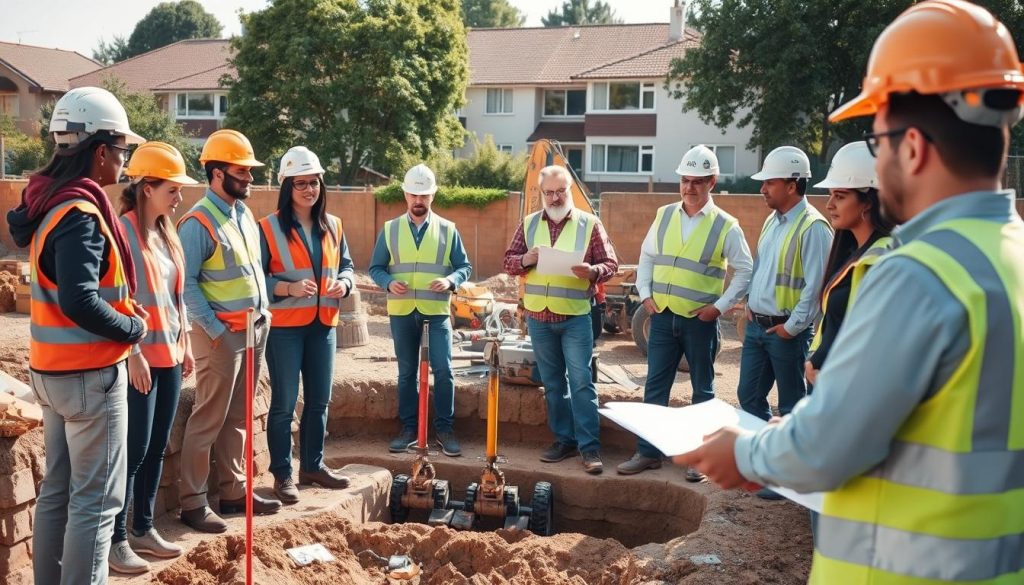
Pricing, offers and how to get started today
Start with a no‑cost structural assessment so you know exactly where your home stands. We offer fixed‑price quotes and clear timelines so you can plan with confidence.
Free no‑obligation structural assessments and fixed‑price quotes
Get a simple, honest appraisal. Our free inspection identifies risks and the likely scope of work. You receive a fixed‑price quote and an outline of the process.
Book a site inspection or email photos for a preliminary assessment
Prefer quick feedback? Email photos and we’ll give a fast preliminary assessment. For full certainty, book a site inspection and we’ll record levels and check access.
Call 1300 970 930 and speak to Chris for expert guidance
Call 1300 970 930 to talk through your concerns. Our team explains how we protect your home, coordinate engineering reports and arrange council certification.
- Free no‑obligation structural assessment and fixed‑price quote.
- Book a site visit or email photos for a fast review.
- We coordinate engineering reports and certification as required.
- Our experienced team scopes the job to avoid surprises for your property.
- If you think you need underpinning, we prioritise safety and peace of mind.
underpinning contractors are ready to inspect and advise. Contact our team today and engage an experienced team you can trust.
Conclusion
Permanent safety for your home begins with a tailored foundation solution and a simple, staged process.
Our underpinning work stabilises footings and foundations to match local soil and site conditions. We design for seasonal movement and variable ground so your home foundation stays secure.
We treat subsidence, uneven floors and foundation movement as a system. That reduces damage, closes cracks and gaps, and protects walls, frames and doors.
Work is council‑compliant, timed to minimise disruption and supported by clear documentation. Call 1300 970 930 to speak to Chris, book a site inspection or email photos for a swift, expert review to secure your property now.