
If you’re searching for clear answers about how seasonal ground movement can affect your home, we can help right now.
We are Underpinning Sydney — structural preservation specialists with 20+ years’ experience. We explain how reactive clay expands when wet and contracts when dry, and how that shrink–swell cycle can start at the foundation and show as cracks, uneven floors and other building damage.
Our team provides council-compliant assessments and engineered solutions. Expect a calm, honest appraisal, a fixed-price quote, and options for stabilisation, repair and certification. We coordinate engineering reports and keep disruption to a minimum.
Free no-obligation structural assessments are available. Call 1300 970 930 to speak to Chris, book a site inspection, or email photos for a fast preliminary review.
Key Takeaways
- Seasonal shrink–swell movement often starts at the foundation and affects the whole property.
- We offer engineered, council-compliant solutions that preserve structural integrity.
- Expect minimal disruption, honest advice and a transparent fixed-price quote.
- We coordinate engineering reports so you can act with confidence and full documentation.
- Book a free assessment or send photos for a fast preliminary opinion the same day.
Understanding reactive clay in Sydney: how moisture causes ground movement and structural damage
When the ground gains and loses water, it expands and shrinks beneath your footings. This shrink–swell cycle changes the volume of the soil under a house and drives uneven movement.
Swelling when wet, shrinking when dry: the shrink-swell cycle explained
In wet seasons the clay absorbs water and swells. In dry spells it loses moisture and contracts.
These repeated changes in moisture content create differential settlement. That causes cracks, misaligned doors, and uneven floors.
Why the Sydney Basin’s clay soils are so reactive and where issues are most common
The Sydney Basin contains expansive clay soils with high reactivity. Areas with strong wet–dry swings, such as the Hills District, are often affected.
Poor drainage or runoff concentrated to one side of the property can make movement worse. Simple moisture control often helps, but some sites need engineered stabilisation.
- Watch for early signs and act before cosmetic damage becomes structural.
- We assess moisture patterns, ground movement and footing exposure on your site.
| Condition | Typical effect | Recommended action |
|---|---|---|
| High moisture content | Soil expansion near footings | Improve drainage; inspect footings |
| Dry conditions | Soil shrinkage and gaps | Maintain even irrigation; monitor cracks |
| Uneven runoff | Localized differential movement | Redirect water; consider engineered stabilisation |
| Expansive clay soil | Long-term cyclic movement | Soil testing and council-compliant design |
AS 2870 site classifications and what they mean for your slab and footings
Understanding your site classification under AS 2870 guides the right footing and slab choices. We translate the standard into clear, council‑compliant actions so you get safe, long‑lasting foundations.
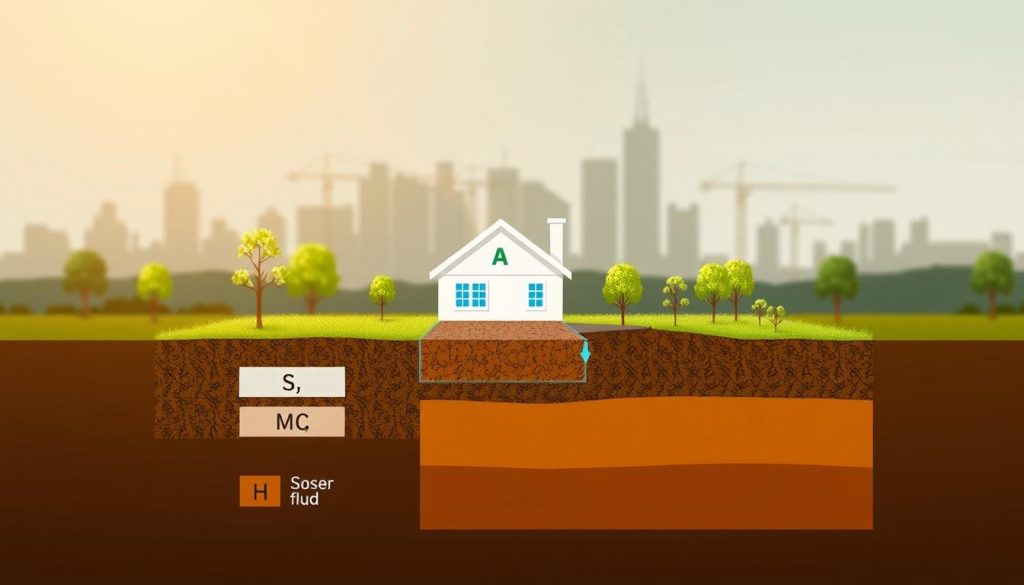
Class S and Class M: slight to moderate reactivity
Class S and Class M are lower to moderate risk. Class M commonly sees 20–40 mm vertical movement between wet and dry seasons.
Controlled drainage and careful detailing keep movement manageable.
Class H1 and H2: higher reactivity, stiffer footings
H1 and H2 need stiffer footing systems and specific pipe protection per AS 2870. We design footing upgrades to resist seasonal movement and protect services.
Class E: extreme reactivity and long‑term management
Class E brings increased slab heave risk and ongoing maintenance. These sites require robust foundations and lifelong moisture control.
- Slab edge drainage and surface falls reduce ponding against foundations.
- Pipework protection to accommodate ground shifts is essential.
- We tailor footing and stormwater designs to your site classification and provide documentation for council certification.
| Classification | Typical movement | Key action |
|---|---|---|
| S / M | Low–moderate (M: 20–40 mm) | Drainage control; standard footings |
| H1 / H2 | Moderate–high | Stiffer footings; pipe protection |
| E | High; heave risk | Robust foundations; long‑term management |
Spot the warning signs at home: from wall cracks to subsidence
A few simple checks around the home can reveal serious structural change early. Look for visible signs and act before damage spreads.
Cracks in walls, ceilings and brickwork, especially near doors and windows
Stepped or diagonal cracks in brickwork commonly appear near openings. Internal cracks beside doors or windows often show ongoing movement.
Uneven or bouncy floors, slab movement and pier shifts
Bouncy or sloping floors point to pier shifts or slab displacement. Persistent sagging suggests subsidence and requires inspection.
Sticky doors, misaligned windows and gaps at skirtings or cornices
Doors that stick or windows that no longer shut squarely are classic signs. New gaps at skirtings or cornices usually mean the issue is structural, not cosmetic.
Plumbing leaks, ponding water and tell-tale site conditions
Leaking pipes and ponding against the house accelerate ground movement and can worsen foundation issues. Exterior falls toward the house increase risk.
Early action prevents bigger costs. If you see multiple indicators, email photos for a quick preliminary view, then book a site inspection. We offer free assessments, honest advice, minimal disruption and fixed-price quotes to restore safety at your property.
| Warning sign | Likely cause | Immediate action |
|---|---|---|
| Stepped/diagonal cracks | Foundation movement near openings | Photograph and arrange assessment |
| Bouncy or uneven floors | Pier shift or slab settlement | Floor level survey; engineer consult |
| Sticky doors & misaligned windows | Differential settlement | Check frames; book inspection |
| Ponding and leaks | Drainage issues; pipe damage | Fix drainage; inspect plumbing |
For prompt, council‑compliant guidance and fixed-price options, visit our assessment page.
How to manage moisture and reduce soil movement around your property
Simple, consistent water control around the building prevents uneven movement and costly repairs. We provide practical, council‑compliant steps you can use right away.
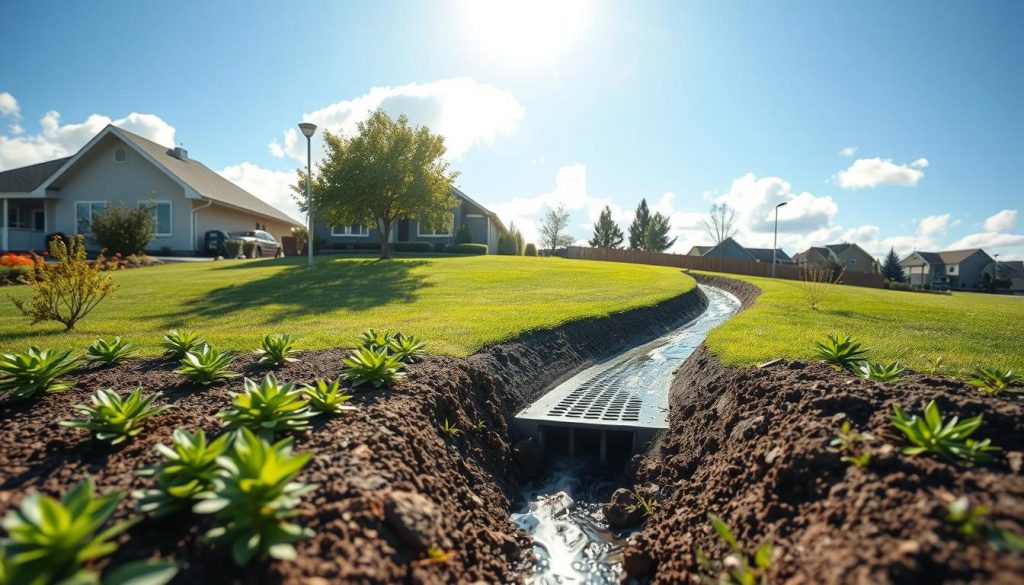
Drainage fundamentals: gutters, downpipes, grading and directing water away
Keep gutters clean and ensure downpipes discharge well away from footings. Regrade the ground so surface water runs away from the home, not toward it.
Install ag drains only where appropriate and with correct outlets. Retaining walls help manage flows between higher and lower areas.
Consistency in moisture: smart irrigation to avoid extreme wet-dry swings
Use regular, even irrigation to reduce shrink–swell cycles that drive soil movement. Mulch and compost near garden beds improve near-surface conditions in clay soil and help retain moisture.
Landscaping choices and subfloor ventilation
Select plants with non-invasive roots and keep trees a safe distance from footings. Consider retaining walls on sloped areas to reduce runoff.
Ventilate subfloors to control humidity under timber floors. We design and install subfloor ventilation systems that minimise disruption and deliver long‑term performance.
- Keep gutters and downpipes clear and routed away from foundations.
- Regrade and install drains where required; use mulch to condition near-surface soil.
- Choose non-invasive plants and provide subfloor ventilation for timber protection.
| Measure | Benefit | Action |
|---|---|---|
| Gutters & downpipes | Stops pooling near footings | Clean regularly; extend outlets |
| Consistent irrigation | Reduces rapid soil shrinkage | Automate watering; avoid long dry spells |
| Subfloor ventilation | Protects timber and foundations | Design and install with minimal disruption |
We design practical moisture management that complements structural repairs. Email photos or book an inspection for tailored advice and a fixed‑price quote.
Professional assessment, soil testing and compliant engineering in Sydney
A thorough on-site review gives the clear guidance needed to protect your home. We start by prioritising safety and urgency so you know what needs attention first.
Free no‑obligation structural assessments and fixed‑price quotes
Start with a free assessment to identify immediate risks. We review your drawings and site history to target investigations efficiently.
AS 2870 soil test, site classification and engineering reports
We arrange an AS 2870 soil test and site classification. The results determine suitable footing and drainage around your foundation and buildings.
- Quotation for testing and classification before work starts.
- Access site, complete tests, and deliver a written reactive clay soil report.
Honest, council‑compliant advice with minimal disruption
We coordinate structural engineering reports and certification for council compliance. Expect a clear report and a fixed‑price quote with defined scope and inclusions.
| Step | What we do | Outcome |
|---|---|---|
| Review plans | Examine drawings and site history | Targeted investigation scope |
| Soil test | AS 2870 testing on site | Site classification and recommendations |
| Report & quote | Written findings and pricing | Council‑ready documentation |
| Book inspection | Email photos or call | Site visit at a time that suits you |
Call 1300 970 930 or email photos for a quick preliminary opinion. We act with honest advice, insured teams and minimal disruption to your home.
Stabilisation and repair options that protect your home’s structural integrity
Effective stabilisation starts with a clear plan that targets the root causes of foundation movement. We pick methods that suit your site classification and your home foundation.
Concrete underpinning
Concrete underpinning strengthens and deepens foundations. It is used when footings need a deeper, stronger base to resist ongoing movement.
Resin injection
Resin injection fills voids through small access points. It binds nearby soils and reduces shrink–swell capacity with fast, non‑invasive work.
Screw piling and other pile systems
Screw piling transfers loads to competent strata. This suits highly reactive clay sites or soft ground where near‑surface foundations are unreliable.
Repairs, re-levelling and retaining wall support
We repair wall cracks and re‑level slabs where feasible. Retaining wall support and certification complete the scope for lasting compliance and peace of mind.
- Engineered, council‑compliant designs
- Fixed‑price quotes and staged work to limit disruption
- Licensed, insured teams and documented sign‑off
| Method | Best for | Key benefit |
|---|---|---|
| Concrete underpinning | Shallow or failing footings | Long‑term footing strength |
| Resin injection | Local voids; moderate movement | Fast, minimal excavation |
| Screw piling | Very reactive clay, soft soils | Load transfer to stable strata |
| Crack repair & re‑levelling | Cosmetic and minor structural | Restores safety and appearance |
Reactive clay soil sydney problems: a practical roadmap to prevention and repair
Begin by confirming site risks, then follow a staged program that protects your home through the seasons.
We manage the process from testing to final certification. That gives you a clear path and reduces the chance of repeat work.
From assessment to sign‑off: sequencing drainage, stabilisation and monitored repairs
- Investigation & AS 2870 testing — define site conditions and slab classification.
- Drainage first — fix gutters, downpipes and surface falls to control water near foundations.
- Choose stabilisation — options include resin injection, concrete underpinning or piles matched to your foundation and site.
- Stage internal repairs — do cosmetic and structural finishes after stabilisation to avoid rework from further soil movement.
- Monitor and maintain — record house levels through seasons and manage consistent moisture with irrigation and landscaping.
We document every step, provide council‑ready certification and handover a compliance pack so you can close out confidently. Older homes often lack compliant tests. We verify conditions before design so your repairs are tailored and permanent.
| Stage | Focus | Benefit |
|---|---|---|
| Assessment | Testing & classification | Clear risk profile for design |
| Drainage | Gutters, grading, downpipes | Reduces concentrated water near footings |
| Stabilisation | Resin, underpinning, piles | Long‑term foundation support |
| Repair & monitor | Final finishes and seasonal checks | Minimises rework; tracks soil movement |
Call 1300 970 930 to speak to Chris, or email photos to start your plan and move from uncertainty to a stable, compliant outcome.
Conclusion
A focused, tested approach brings long‑term stability to your home and peace of mind.
We combine AS 2870 testing and a clear soil test with engineered repair choices like resin injection, underpinning or piling. This stops subsidence and restores floors, walls and doors.
We prioritise moisture control to reduce future volume change and limit further damage. Good drainage and regular monitoring support durable repairs.
Underpinning Sydney has 20+ years’ experience. We are licensed, insured and deliver council‑compliant reports, fixed‑price quotes and minimal disruption.
See signs like cracks, sticky doors or uneven floors? Email photos for a quick view, or call 1300 970 930 to speak to Chris and book a free assessment and site inspection.