
We protect your home and property with council-compliant structural repairs and engineered support. Call 1300 970 930 to speak to Chris, book a site inspection, or email photos for a quick assessment.
We are structural preservation specialists with 20+ years’ experience. Our team offers concrete underpinning, resin injection, screw piling, helical tiebacks and crack repairs as tailored solutions.
We assess your site, coordinate engineering reports and deliver minimal-disruption works that meet certification requirements. You get honest, condition-led advice and a transparent fixed-price quote before any work starts.
Poor drainage and rising soil loads cause costly failures if ignored. We use low-pressure grout injection and engineered piling where needed to stabilise sandy soils and seal water ingress quickly.
Key Takeaways
- We protect homes and property with certified, council-compliant methods.
- Free, no-obligation structural assessments and transparent fixed-price quotes.
- Choice of solutions: concrete, screw piles, resin or grout injection.
- Minimal disruption and tidy, insured workmanship on every job.
- We coordinate engineering reports and certification for peace of mind.
- Call 1300 970 930 or speak to Chris for a fast preliminary review.
Protecting Sydney homes with compliant retaining wall underpinning and structural repairs
We diagnose and fix structural damage with engineer-led plans and clear certification.
Problems often start quietly. Soil movement, poor drainage and ageing construction create pressure behind structures. Early action stops small cracks becoming major foundation damage.
Water is usually the culprit. Leaking pipes, heavy storms and nearby excavation raise hydrostatic pressure and shift ground support. Tree roots and adjacent building work also change loads under your house.
Safety first: engineer-designed, council-compliant rectification
We prioritise safety with engineer-specified remedies and council certification. Our assessment confirms the foundation conditions causing the issues you see.
- Typical impacts: cracks, leaning, and sticking doors or windows near the structure.
- Rule of thumb: walls over 1200 mm need an engineer’s design and formal sign‑off.
- Early intervention reduces cost, protects your house and preserves property value.
| Cause | Common Impact | Typical Fix | Benefit |
|---|---|---|---|
| Poor drainage / leaks | Stepped cracks; hydrostatic pressure | Improved drainage; grout sealing | Stops water-driven movement |
| Soil movement / roots | Lean, subsidence, foundation shift | Screw piles or concrete piers | Restores load-bearing support |
| Ageing construction | Material degradation; sticking windows | Engineer design and structural repair | Long-term compliance and safety |
We provide a clear plan, insured works and documented certification for your records and resale. For focused advice on levelling and foundation care see our house levelling services.
Retaining wall underpinning Sydney
Each property needs a tailored method to restore foundations and long‑term stability.
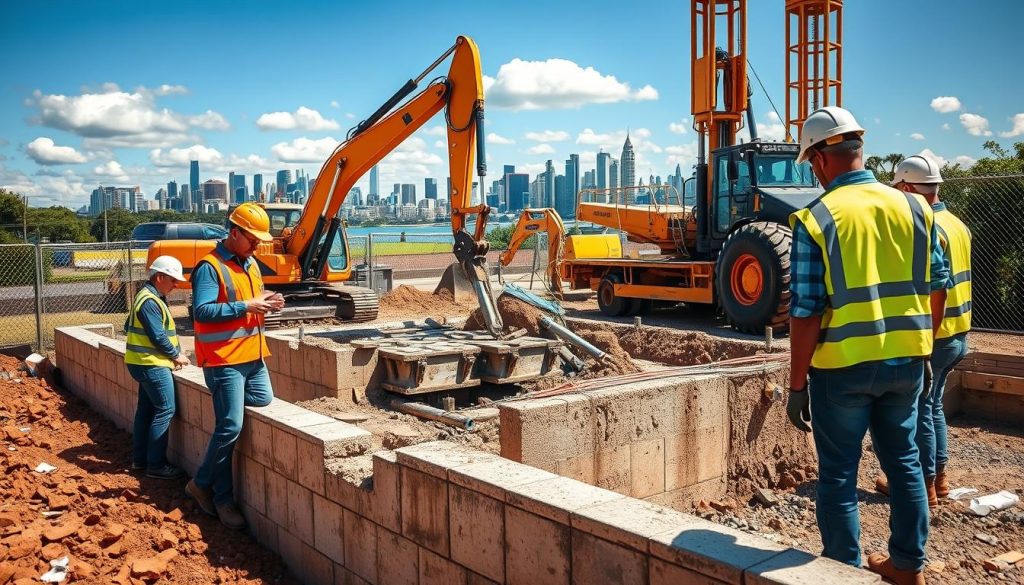
Concrete piers, screw piles and engineered reinforcement
Concrete piers suit heavy loads and where durability is essential. Screw piles work well in tight access and near boundaries. Engineered tiebacks or soil nails are specified when earth retention is needed.
Resin and grout injection for sandy ground
Resin and ultra‑fine cementitious grout penetrate sands and fill voids. These materials set quickly (4–8 hours) and seal water paths while increasing local strength.
When we recommend each method
We assess soil, access and the engineer’s brief before offering advice. Our recommendations balance performance, site limits and budget. You get a clear explanation of the type selected and why it best restores the foundations.
| Method | Best for | Benefit |
|---|---|---|
| Concrete piers | Heavy loads, aged foundations | Long‑term durability and stiffness |
| Screw piles | Tight access, boundary works | Low vibration, fast install |
| Resin / grout injection | Sandy soil, voids and leaks | Penetration, sealing and rapid set |
| Soil nails / tiebacks | Shoring and earth retention | Engineer‑specified lateral support |
We act as your contractors and coordinators. Ask for a free assessment and a fixed‑price quote. Our honest advice explains the method and expected outcomes before any work starts.
Warning signs and causes: cracks, rotation, subsidence and drainage problems
You may first notice subtle changes at door frames, fence lines or garden edges. These small signs often point to shifting ground under your house.
Typical symptoms
Look for stepped cracks in the face and along mortar joints. Check for rotation, bulging or a structure that leans out of plumb.
Notice soil washout behind or below the structure after heavy rain. Sticking gates and windows nearby can indicate movement.
Common root causes
In Sydney, failures often follow inadequate drainage, leaking pipes and torrential rain events. Tree roots and adjacent works also change loads and displace soil.
- Stepped cracks and mortar separation
- Rotation or leaning
- Soil washout and hydrostatic pressure after storms
- Sticking windows and doors
- Subsidence along fences and paths
| Cause | Impact | Immediate step |
|---|---|---|
| Leaking pipes | Hidden saturation, subsidence | Isolate leak and call us |
| Torrential rain | Hydrostatic pressure, soil loss | Improve drainage, arrange assessment |
| Tree roots / adjacent works | Load change, displacement | Engineer review and stabilise |
Early stabilisation reduces cost and mess. If you see these signs at your house, book our free assessment or view our foundation failure guidance promptly.
Our process: assessment, engineering, underpinning, certification and prevention
A clear, staged process keeps your building safe and limits disruption to daily life. We manage the entire project from first contact to final certification so you deal with one team throughout.
Free no‑obligation structural assessment and photo pre-checks
Start with a free photo pre‑check or an on‑site structural assessment. This quick review lets us confirm urgency and suggest next steps without cost.
Engineer coordination, design and fixed‑price quote
We coordinate certified engineers and prepare a clear design. You receive a fixed‑price quote and a defined scope before any work begins.
Execution with minimal disruption and insured workmanship
Work is staged to keep access and reduce interruption. Grout injection can set in 4–8 hours, allowing staged fixes and faster progress.
All work is insured and installed to engineer specifications, with safety systems to protect your building and neighbours.
Drainage, subfloor ventilation and support to stop recurrence
We address root causes. That includes drainage upgrades and improved subfloor ventilation to protect adjacent foundations and stop repeat movement.
- Free photo checks and on‑site assessment to start the process.
- Our team coordinates engineering design tailored to your site.
- Fixed‑price quote and documented scope before work starts.
- Staged works and compliant methods for minimal disruption.
- Insured workmanship, certification and handover documentation.
For projects requiring specialised pinning or foundation detail, review our pinning foundations page. See pinning foundations for more on engineered options.
Methods we use and why they’re chosen
Each project starts with a clear engineer brief and a choice of practical, proven methods. We explain trade‑offs and select the best type of support for your site and budget.
Concrete piers for heavy-duty support
Concrete piers give robust, long-term support for high loads and aged structures. They suit heavy foundations where stiffness and permanence matter.
Screw piling for tight access and low vibration
Screw piles install quickly with low vibration. They work well near boundaries and services and keep disruption to a minimum.
Grout and resin injection for sandy ground
Low-pressure resin or ultra‑superfine cementitious grout penetrates sands, fills voids and seals water paths. It sets in 4–8 hours, so projects move faster and disturbance is reduced.
Soil nails and tiebacks for earth retention
Soil nails with helices and tiebacks provide engineered lateral support. These systems require specific design by an engineer and are used where earth retention is needed.
| Method | Best for | Key benefit |
|---|---|---|
| Concrete piers | Heavy loads, aged foundations | Durable long‑term support |
| Screw piles | Tight access, near services | Low vibration, fast install |
| Grout / resin injection | Sandy soil, voids, leaks | Penetrates, seals, quick set |
| Soil nails / tiebacks | Shoring and earth retention | Engineered lateral stability |
Our contractors install to engineer drawings with QA checks. We match the method to the structure, walls and ground to protect adjacent buildings and ensure compliant, honest foundation repair.
Costs, timing and what to expect on site
Clear expectations about cost, timing and site impact stop surprises during the repair. We give plain answers so you can plan the project and budget with confidence.

Factors that influence cost and schedule
Cost depends on height, length and access. Soil type and drainage issues change the method we select.
Nearby services and engineering complexity also affect time and price. Early fixes for subsidence save money over the years.
Engineer design and compliance
As a rule of thumb, walls over 1200 mm need an engineer design and certification. We include certification in our fixed-price quote so compliance is clear.
Typical timeframes and staging
We stage work to keep your property functional. Grout injection can set in 4–8 hours, which speeds critical tasks and shortens on-site time.
We schedule noisy work at sensible hours and notify neighbours. Expect a clean site, safe access and regular progress updates.
- We provide a detailed fixed-price quote before any site work.
- Staging keeps disruption low and allows phased project delivery.
- Ask for options to balance time, budget and performance.
| Factor | How it affects cost | Impact on time |
|---|---|---|
| Height & length | Higher cost for larger repairs | Longer on-site work |
| Soil & drainage | Method selection changes cost (grout, piles) | May need preparatory drainage work |
| Access & services | Restricted access increases labour cost | Slower progress, staged work |
| Engineering & certification | Design fees included in quote | Approval time before work starts |
Transparent pricing and a clear quote are standard. Early action on ground issues reduces lifecycle cost and avoids messy, expensive repair later.
Conclusion
A quick, expert assessment can stop minor cracks becoming major foundation damage. We offer honest advice, clear engineering and fixed quotes so you know the job and cost up front.
We are licensed, insured and compliant. Our team has years of experience delivering foundation repairs and services with minimal disruption to your home and house surrounds.
Our experts diagnose cracks, sticking windows and ground movement. We provide practical solutions that fix causes, not just visible damage.
Act today to avoid messy, costly work later. Call 1300 970 930, speak to Chris, book a site inspection, or email photos for a fast quote and the job done with confidence.